Wednesday, May 20, 2015

New friend!

Our tarantula has been popular with all the kids at SET, but she's not enjoying herself. Every since we brought her back, she's spent all her time curled up in the far corner of her cage. She's had a long life as a school pet and it's time for her to retire.

In Rosie's place? This beauty.


Our neighbors found her and brought her over. Despite what everyone thought, she's not a South American spider that snuck into the country on some bananas. She appears to be a Dolomedes tenebrosus, a fishing spider native to the northeast. As the name suggests, these spiders mostly hunt water bugs and even small fish, although they're capable of hunting on land as well.

For right now, we'll be keeping her in a plain, water-free cage and providing her with crickets and mistings. If she seems to like the school life, we'll give her a fancier home and if not, she'll return to the forest.

Tuesday, May 19, 2015

Chestnut seedling update!

They're growing fast!


Well, two of them are. Something's wrong with the third, and it keeps sending up new shoots rather than growing what it has. Hopefully it'll recover!

We'll be taking them home for a little bit because they're not getting enough sunlight here. Even sprouted chestnuts are at risk of being dug up by squirrels and eaten, so they have to be kept indoors for now. We'll plant them outside when they're a little bigger, during our summer program.

Monday, May 11, 2015

The chestnuts are sprouting!

Last year, I talked about the American chestnut, enormous trees that were once the cornerstone of the eastern forests until it was wiped out by a fungal blight, and how after a hundred years of attempts to bring them back, researchers finally managed to genetically engineer a tree that was immune. We naturally backed the fundraiser, and were sent three wild-type chestnut seeds to plant.

Each of the science classes planted one of the nuts, and they've all sent up shoots!


These sprouts, beautiful as they are, are doomed.

They're not the genetically engineered nuts and have no immunity to the deadly blight. But with luck, they'll last several years before dying, long enough to crossbreed with the new breed of chestnut and preserve their genes. And we'll learn a lot about growing chestnuts from them, so we'll be ready to care for the immune chestnut seeds when they're ready.

Saturday, March 14, 2015

Mr. Fluffercat

Creative Writing + Public Speaking

    “I'm late! I'm Late!!” Mr. Fluffercat yelled down as he raced down the streets of London. Forgetting to look both ways, he started to run across a road but skidded to a stop just in time to let a car pass though. After a while huffing and puffing he managed to reach his office building.
    Motivated by the sight of the elevator, he gained all of his energy back and Mr. Fluffercat anxiously waited in front of the doors while pressing his fists repeatedly on the button. After what seemed forever, the swoosh of the elevator doors opening rang in his ears and he scrambled inside.
    “Level 24! LEVEL 24!!” he screamed at the buttons as he aimed at but failed again and again to hit the 2 and the 4 with his big furry paws. Ding went the elevator over and over again at all of the wrong floors until by a miracle another businessman, a skinnier cat, got in the elevator and pressed the number 24. Finally, Mr. Fluffercat reached level 24 and bolted out, shoving the other cat to the side.
    Right, left, left, right, he ran until he reached his office. He sighed a sigh of the deepest relief, until he realized that he never stopped moving and was sliding down the marble floor of the office hall. “ Curse my over-fluffy paws!” he thought. Mr. Fluffercat let out a shriek and every cat peeped their head out the door of their office to see what the noise was coming from. He was red all over and decided to walk for the first time in the day back to his office. 

Once inside, the cat didn't even close the door behind him. As soon as he saw the printer he forgot all about walking and bolted to the printer. Mr. Fluffercat ripped the paper in his 

suitcase and put it in the fax machine. Then he went to the copier next to it and made 11 copies for the cats at the conference. Without noticing, his hands automatically rose up and his jaws automatically started nibbling. Once Mr. Fluffercat heard the last beep, he snatched all of the copies, stuffed them into his suitcase and went running to the elevator again.
    This time, Mr. Fluffercat managed to punch in the numbers, and he quickly got to floor 36, and raced all the way to the other side of the building until the door to the conference room was right in front of him. With pride that he had made it just 7 minutes late, he tried to open the door and found that it was locked! On the door Mr. Fluffercat found a stickynote that read “Meeting canceled”
    “WHAT?!”


Saturday, February 21, 2015

Feb Vacation!

We had a busy, busy vacation week. Here's some pictures!


Friday, February 13, 2015

Happy Friday the 13th!

Did you know they managed to upload a worm brain into a computer and then gave it control over a Lego robot just like the ones we use?


We won't be having regular classes next week, but we will be running a special vacation program! There'll be a second one for April vacation, assuming that isn't canceled due to the snowpocalypse.

If you'd prefer to stay inside, perhaps you'd like the collaborative game DUST, where you'll use scientific data to try to solve the unfolding mystery. Involves one of the most awesome animals in existence, the water bear!

Wednesday, January 14, 2015

Cake!

Yesterday and today's food were Pillsbury boxed mixes. Pillsbury: for when you want cake without effort. Try it yourself, kids. Today's mini cupcakes were cooked with the Hostess Mini Cupcake Maker, which does indeed make mini cupcakes, and fast.


Saturday, January 3, 2015

2015!

Welcome to the new year, everyone.

Here's a wonderful blog about local wildlife for you while you wait for spring: http://northeastnature.tumblr.com/

Due to global warming, it's now rare for us to have a snowy white Christmas, but as a result, you may find some of the early spring flowers sprouting any time thoughout the rest of winter, so keep an eye out!

Now is also a good time to put up birdfeeders. January has been warm in recent years, making it a good time to set things up, while February is still often quite cold, and animals will need a good stock of fat to make it through to spring safely. You might even see a opossum one night!

Thursday, December 18, 2014

Bye for 2014, McAuliffe!

Our first semester of Web Design and Scratch are over!

Check out the kids' websites! (And a reminder to Scratch kids, send me your programs if you want to show them off!)

Also, check out this guy using two robotic limbs at once! Technology is amazing.


Wednesday, December 17, 2014

Expanding hagfish slime

Science 3-5, as promised, here are the videos about hagfish and their amazing slime.


Also, remember the makeup class is next Monday and if you can't make it, you need to pick up the worksheet and cabbage juice now.

Tuesday, December 16, 2014

Happy Holidays!

Hi everyone!

Today's food was gingerbread cookies (from a mix) and hot chocolate with extra cocoa powder. Cocoa is thought to have health benefits, including improving brain functioning.

And here's a video of a swimming anglerfish! Although people have examined numerous dead anglerfish, this video shows one swimming naturally in her normal habitat.


Wednesday, December 10, 2014

Glasswing butterflies


Today's food was cranberry sauce muffins. There's also a whole grain, oats, brown sugar version over at Serious Eats.

And now, here are lots of glasswing butterfly pictures. Scientists are still not sure how or why the wings are transparent.


Tuesday, December 9, 2014

Cookie videos

Hey everyone!

Today's food was storebought cookies for the animation kids over at Ashland library. Check out their videos!

Today's science fact is the slingjaw wrasse's existence.

You can probably tell why it's called that.
The slingjaw wrasse's telescoping jaw doesn't just bring the mouth closer to the prey. It actually creates suction, pulling in their food.

Tuesday, December 2, 2014

Mind-controlled robot arms!


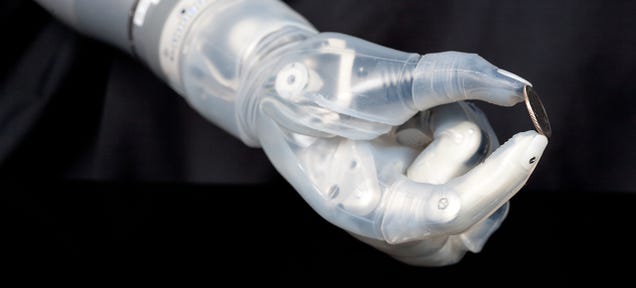
Doesn't that look amazing? This is a robot hand that can sense the electric pulses in muscles, so people who've lost their hands can put it on and control it just by thinking what they want, and there are even tiny motors provide feedback to the existing so they can "feel" how hard they're gripping.


Today's food was crumb-topped apple pumpkin pie, minus the crumbs. I chose this pie because the very first published recipe for pumpkin pie was to cut up chunks of pumpkin, mix it with slices of apple and sugar, and bake. What we call pumpkin pie today was originally called pumpkin pudding.

Tuesday, November 25, 2014

Banana peel plastics!

Elif Bilgin, a sixteen year old from Turkey, discovered a way to turn banana peels into bioplastic.


Today's food was Martha Stewart's cranberry cobbler, with extra sugar and butter. I'd also suggest cutting the cranberries up so they're less tart. Happy Thanksgiving!

Monday, November 17, 2014

Real-life animated drawings

A cool look at how mixing animation and real life stop motion can produce surprising effects. The clear plastic sheets being held up are called cells and are what animators like Disney relied on to produce their movies.


Friday, November 14, 2014

The American Chestnut (and you)

Hey, everyone!

The Fall semester of S.E.T. School is now halfway over! The students have all worked hard and hopefully had fun as well. It's great to see everyone's eager faces when they come to class.

We had some spooky science fun at our Halloween party: slime, spider eggs, strobe lights, and a laughing robot skull. A big thanks to the parents who helped out with food and activities!

And students have made their first Web Design pages, as well as several short videos in Science of Special Effects class.

Now, I'd like to take a moment to talk to you about chestnuts, a traditional food this time of year, and just becoming available in the grocery stores.


But the chestnuts in the stores today aren't the chestnuts in the song.

After the ice age ended, the native Americans on the eastern half of this continent found themselves living in forests thick with chestnut trees. The trunk could be as thick as ten feet in diameter and the tree grew to a height of one hundred feet with massive branches. These majestic trees greeted the Vikings when they arrived thousands of years later, and when European colonists arrived in America hundreds of years after that, they too marveled at the American chestnut.


Historically, the American chestnut made up around one-fourth of the trees in the eastern forest, making it by far the most common tree species. A mature tree produces an enormous quantity of nuts, and does so every year. Most nut trees aren't so consistent. Oak trees are one of the worst, with trees all producing enormous numbers of acorns one year and none at all the next. Any creature trying to live on acorns as their main food source would find themselves starving one year, so from the tiny mouse to the giant bear, animals relied on chestnut production for a stable food source.

Humans relied on it as well, with many poor rural communities depending on the chestnut for their livelihood, selling the nuts and making everything from houses to furniture from the wood. Chestnut wood is much lighter than oak and almost as strong, and it can last for centuries without rotting.

Other parts of the tree are just as vital to the forest ecosystem. The leaves are much more nutritious than most tree leaves are, making them the preferred food of many insects. As the leaves decompose in autumn, they enrich the soil and create the type of soil associated with woodlands. Many shade-dwelling plants also evolved to shelter under the tree's huge branches.

They even benefit aquatic ecosystems. Leaves from maples turn the water brown or even black. This blocks the light, preventing plants from photosynthesizing and suffocating many aquatic animals. American chestnut leaves, in contrast, don't stain the water, and their incredibly rot-resistant branches fall to create hollows for fish and other creatures, as well as making much better dam material for beavers.

In 1904, a scientist observed an American chestnut tree's bark had begun to split and brown.


The damage spread rapidly. A deadly fungus had infected the tree, destroying the cambium layer under the bark. This is the layer containing the tubes that convey food and water to nourish the tree. Without the cambium layer, the tree dies of thirst.

It was chestnut blight, a fungus that had reached America from one of the Japanese chestnut trees being imported at the time. Japanese chestnut trees can fight off the disease, but no American chestnut survived it. The fungal spores spread by wind. The disease expanded fifty miles a year. Within a few decades, the American chestnut were dead.


Some of the long-dead trees can still be found standing today, a testament to the strength of the wood and its legendary resistance to rot.


A few trees survived in remote areas outside the usual range. They had been planted in places as far as California, and for a while, they were outside the blight's range. The last remaining large stand of American chestnut trees is in Wisconson, planted by a settler from the east. Unfortunately, the blight finally reached them in 1987. Since then, scientists have tried desperately to save the trees but can only slow the spread.

Many attempts have been made to restore the American chestnut to its original range. Replanting wild chestnuts failed, as none of them possessed any resistance against the blight. Crossbreeding the American chestnut to its fungus-resisting Chinese cousin, a project began in the 1920s, also failed to produce trees that could survive the disease. Finally scientists isolated a gene in wheat that nullifies acid, which the fungus uses to devour the tree. They gave this gene to American chestnut trees in the hopes they'd survive an infection.

And for the first time in a hundred years, they lived. Not only can they survive the disease, they're not even weakened by it, shrugging off the fungus that killed billions of trees. Perhaps the most wonderful thing about this is that the transgenic trees have not had to sacrifice any of their original DNA the way hybrid crosses would. If we spread this new tree across the country, it'll be as if the chestnut blight never happened.

If you think that sounds like something you want to support, then spread the word about the Ten Thousand Chestnuts Challenge, a fundraiser aiming to produce 10,000 new chestnut trees to begin reforesting.

Sunday, August 10, 2014

Summer Week 6&7!


Week 6 was SWEET! The older kids had a delicious time learning about the history and science of sugar in Sugar Science. They started with the oldest source of sweet goodness, honey, and made some honey ball candies. They got to see, feel and taste nine different types of sugar, like raw sugar, coconut sugar, brown sugar, agave nectar, etc. They tasted their way to modern creations like corn syrup, and made a model of the molecular structure of a sugar molecule. They learned that at different temperatures sugar molecules begin to lose water, and this changes the appearance and texture of the sugar. The students experienced the soft ball, hard ball, soft crack and hard crack states of sugar. And, of course, they learned how to make candies like marshmallows, caramels and lollipops by carefully controlling the cooking temperature of the sugar.

They spent the other half of the morning programming using Scratch, a programming language developed at MIT. Making colorful games with the program was a popular activity and the children enjoyed sharing techniques and playing each others' games!


In the afternoon, the older students learned the engineering concept of hydraulics. They spent the week exploring how water under pressure can move devices, and then constructed mechanical arms controlled by pumps made of syringes and tubing. These arms were a big hit and the students enjoyed challenging each other to hydraulic arm wrestling!

Meanwhile, the younger students learned all about volcanoes. They spent the first two days building and painting a model of a volcano. On Day 3 they hit the lab and experimented with different ingredients for making the best "lava" to erupt in their volcano. Each team came up with a recipe, and the class voted on the favorite. On Day 4 they whipped up a big vat of lava and took our volcanoes outside to erupt them! They decorated the volcanoes with dinosaurs, who soon got buried in bubbling lava.

In the afternoon, the younger students took up their wands and enrolled at Hogwart's School of Witchcraft and Wizardry! First the new students were sorted into Houses, with Gryffindor being the most popular. They learned wizard secrets about the Sorcerer's Stone, how to care for magical animals, and cook up a delicious witch's brew! They also decorated a cake with characters from the Harry Potter books and we celebrated Harry Potter's birthday on July 31st!

Week 7 was busy with construction and contraptions. The Jr. Architects learned about bridges and were challenged to build a bridge that could span two chairs and hold up at least one bottle of water. They built the highest tower possible using a limited supply of materials. They also explored an unorthodox building material, balloons! They built a fun house out of lots of twisty balloons.


In the afternoon, they explored the concept of buoyancy by molding boats out of clay, very tricky! They also made submarines, balloon-powered cars, and traditional paper air planes, and cylinder gliders. On the final day, they explored Newton's Third Law as they investigated the balance between fuel, weight and pressure when shooting water rockets.

Just what do doctors do? The older campers got to see for themselves in Med School. They learned about diseases of all sorts and their effect on the human body. They studied bones, learning about the importance of vitamin D and calcium in the diet (don't want to get rickets, do we?). They studied how muscles work and constructed models of hands with tendon-controlled joints. They dissected and examined a calf's heart, and learned about heart disease and how to read an EKG. The heart and lungs are closely tied, and the students made a model of the lung.
In the afternoon, it was Motor Madness as the older students worked on projects that taught them about motors, batteries, and wiring and how to put it all together in motorized contraptions.
More pictures from the week: